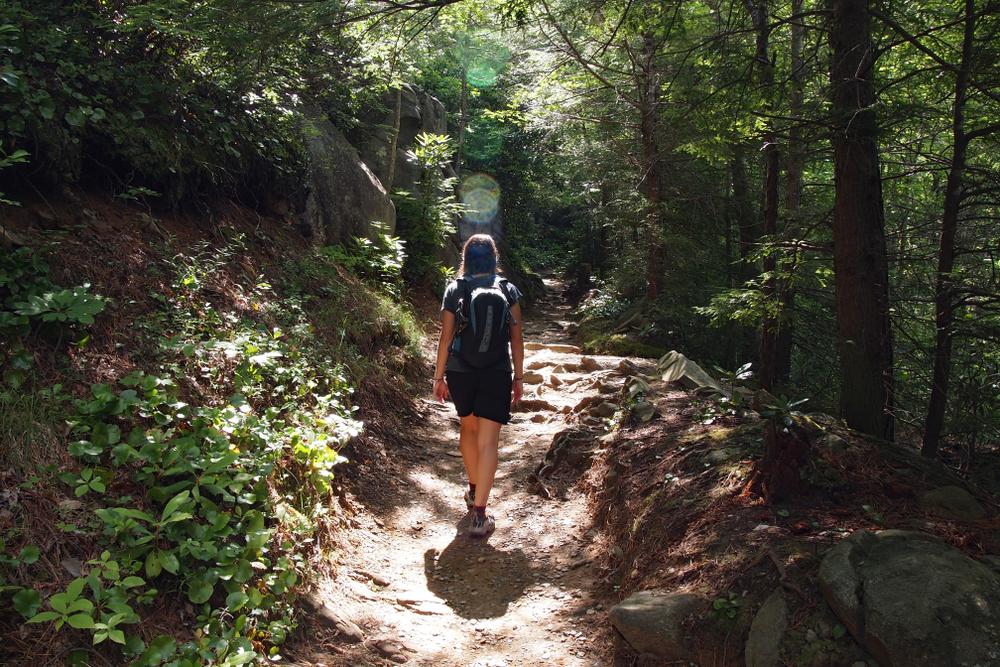
Historic Hikes in the Smokies
If you want to explore some of the history of the Smoky Mountains during your hike, try one of the trails mentioned below. Each of them offers breathtaking views for you to enjoy!
Kephart Prong
The trailhead is located at the footbridge over the Oconaluftee River, 7.0 miles north of the Oconaluftee Visitor Center on the Newfound Gap Road. The first 0.25 mile of trail passes by the site of an old CCC camp and fish hatchery.
Little Greenbrier
Park at Metcalf Bottoms and walk across the bridge to begin the Metcalf Bottoms Trail, and in 0.6 mile, you'll come to the Little Greenbrier School. If you wish, you can continue 1.0 mile from the school to the Walker Sisters' farmstead on the Little Brier Gap Trail. The Little Brier Gap Trail starts at the barricade uphill from the school.
Old Settlers
Follow the road into the Greenbrier area and turn at the bridge toward Ramsay Cascades Trail. Old Settlers Trail starts on the left just after the second bridge. The first 1.5 miles of the trail pass through remnants of the old Greenbrier community.
Old Sugarlands
Park at Sugarlands Visitor Center, and you'll easily find the trailhead. The first 2 miles of this trail offer a glimpse of the old Sugarlands community, which predates the national park. A 6.2 mile loop hike can be achieved by combining Old Sugarlands Trail and Twomile Branch Trail.
Woody House
Follow the Rough Fork Trail from the end of Cataloochee Road for about 1.0 mile to reach the Woody place and its 1880’s home.
Hiking Safety Tips
It is important to be well versed before exploring the backcountry. Here are a few basics to help you get started:
- Always hike with another person.
- Always bring a small flashlight.
- Always bring water.
- All water taken from the backcountry should be treated.
- Let someone know your route and return time.
- Wear appropriate shoes.
- Carry a small first aid kit.
- Check current weather conditions and be prepared for quickly changing conditions.
Leave It There
Whether it be plants, rocks, or animals, please leave it there! Whatever you find in the park is protected for the enjoyment of future generations. It may be easy to rationalize that only one flower that you pick will not hurt anything, but if everyone who visited the park took just one flower there would be none left to enjoy today. More importantly, the seed would be prevented from falling and propagating the species. All plants, including ferns and mosses, are protected. Rocks might be a nice keepsake, but again, they too serve a function.
Most everyone will realize that animals are protected here, and poaching is prohibited. You might not know that feeding the animals is also prohibited to protect not only the hand that is feeding them, but the animals’ well-being as well. All wildlife is protected. Fishing is permitted; however, there are very strict fishing regulations, and you know the rules if you intend to fish.
There is an adage around that goes "take nothing but pictures and leave nothing but footsteps." This is not as true as it used to be because the park wants you to take other's litter, and with increased backcountry visitation, they emphasize low impact camping to minimize the impact of the footsteps left. Please check for information on Low Impact Camping before leaving the trailhead.
- Picking, digging, or otherwise damaging plants is prohibited in the park. Subject to a $5,000 fine and 6 months' imprisonment.
- Persons feeding or disturbing wildlife are subject to a $5,000 fine and 6 months' imprisonment.
- Pets are NOT permitted on park trails, with the exception of the Gatlinburg Trail and the Oconaluftee River Trail. They must be on a leash at all times at campgrounds, picnic areas, and other developed areas.
- Camping is permitted only in designated sites.
Being Bear Aware
Black bears in the park are wild, and their behavior is sometimes unpredictable. Although extremely rare, attacks on humans have occurred, inflicting serious injuries and death. Treat all bear encounters with extreme caution and follow these guidelines:
Encounters Along the Trail
Remain watchful. If you see a bear at a distance, do not approach it. If your presence causes the bear to change its behavior (stops feeding, changes its travel direction, watches you, etc.) – YOU’RE TOO CLOSE.
Being too close may also promote aggressive behavior from the bear, such as running toward you, making loud noises, or swatting the ground. The bear is demanding more space. Don’t run but slowly back away while watching the bear. Try to increase the distance between you and the bear. The bear will probably do the same.
If a bear persistently follows or approaches you, typically without vocalizing, or paw swatting, try changing your direction. If the bear continues to follow you, stand your ground. If the bear gets closer, begin talking loudly or shouting at it. Act aggressively, and try to intimidate the bear.
Act together as a group if you have companions. Make yourselves look as large as possible (for example move to higher ground). Throw non-food objects such as rocks at the bear. Use a deterrent such as a stout stick if you have one. Don’t run and don’t turn away from the bear.
Don’t leave food for the bear; this encourages further problems. Most injuries from black bear attacks are minor and result from a bear attempting to get at people’s food. If the bear’s behavior indicates that it's after your food and you’re physically attacked, separate yourself from the food and slowly back away.
If the bear shows no interest in your food and you’re physically attacked, fight back aggressively with any available object — the bear may consider you as prey! Help protect others, report all bear incidents to a park ranger immediately! Above all, keep your distance from bears!
Encounters in Camp
The best way to avoid bears is to not attract them. Keep cooking and sleeping areas separate. Keep tents and sleeping bags free of food odors; do not store food, garbage, or other attractants (i.e., toothpaste, soap, etc.) in them.
A clean camp is essential to reducing problems. Pack out all food and litter; don’t bury it or try to burn anything. Proper food storage is required by regulation. Secure all food and other attractants at night or when not in use. Where food storage devices are present, use them; otherwise, place all odorous items in your pack.
Select 2 trees 10-20 feet apart with limbs 15 feet high. Using a rock as weight, toss a rope over a limb on the first tree and tie one end to the pack. Repeat this process with the second tree. Raise the pack about 6 feet via the first rope and tie it off. Then pull the second rope until the pack is up at least 10 feet high and evenly spaced; it must be 4 feet or more from the nearest limb.
Garbage Kills Bears!
- Secure all food, toothpaste, soap, and trash at night or when not in use.
- Do not cook or store food in or near your tent.
- Pack up ALL your trash, don’t bury or burn anything!
- If a bear approaches you, frighten it by yelling, banging pans together, or throwing rocks.